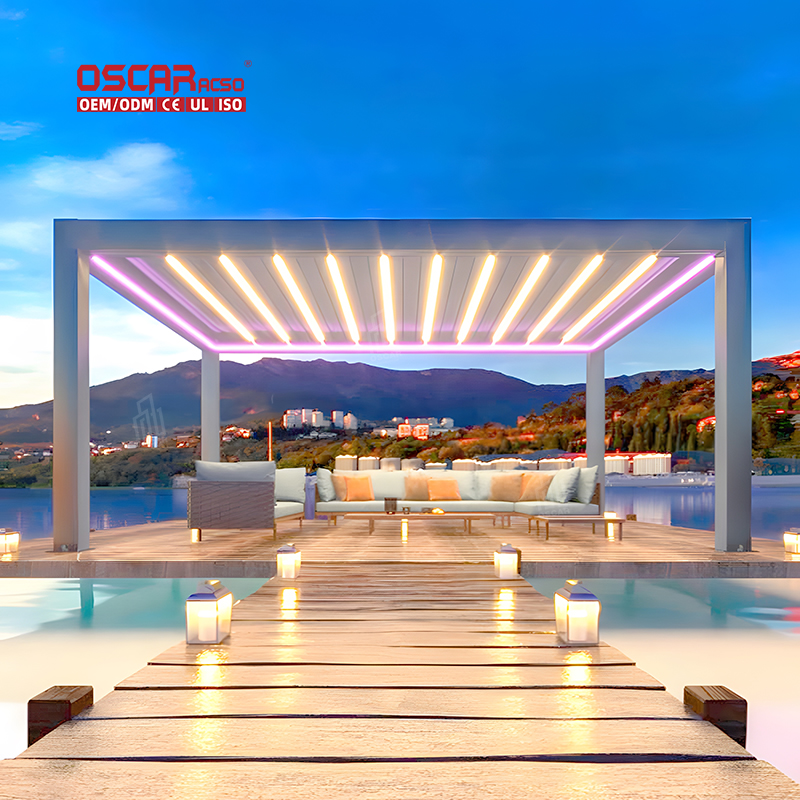
What Exactly is an Automatic Pergola Motor? 🔌
An automatic pergola motor is the hidden powerhouse that transforms a static structure into a dynamic, responsive outdoor living space. It’s an electric motor, typically tubular and designed to integrate seamlessly into your pergola’s frame, enabling you to open, close, or adjust the louvers or canopy with a simple command. No more cranking handles or braving the elements to manually adjust your shade—this technology brings push-button convenience to your backyard oasis. The best part? It’s designed for silent operation, so you can enjoy your peaceful environment without mechanical noise interruptions.
Why a Remote-Controlled Motor is a Game-Changer 🎮
Why struggle with manual adjustments when you can command your pergola with a click? Remote control functionality isn’t just a luxury; it’s a transformative feature that enhances how you interact with your outdoor space.
- •
Instant Adaptation: React instantly to changing weather. Sudden rain? A button press closes the louvers to keep you dry. Intense sun? Adjust the slats for perfect shade without leaving your seat.
- •
Effortless Operation: It’s a major boon for everyone, especially making outdoor spaces more accessible for the elderly or those with mobility challenges.
- •
Integrated Living: This technology blurs the line between your indoor and outdoor rooms, making the patio a true extension of your home.
Key Features to Look For in a Quality Motor 🔍
Not all motors are created equal. When choosing one, prioritize these critical features for long-term satisfaction:
- •
Torque (Nm): This determines the motor’s strength. For larger pergolas or heavier canopies, you’ll need a higher torque (e.g., 50 Nm, 70 Nm, or even 120 Nm) to ensure smooth and reliable operation.
- •
Speed (RPM): A slower RPM (like 12 or 17) is often better for louvers, allowing for precise, gradual adjustments to fine-tune light and shade.

- •
IP Rating: Look for a minimum of IP44, which means it’s protected from splashing water and dust—essential for any outdoor installation.
- •
Obstacle Detection: A crucial safety and protection feature. If the motor detects an obstruction (like a branch or furniture), it will stop or reverse to prevent damage.
.jpg "automatic pergola motor with remote control")
Beyond the Basic Remote: Smart Control Options 📱
The humble remote is just the beginning. Modern pergola motors integrate into a wider ecosystem of smart home automation, offering unparalleled control.
- •
Smartphone App Control: Manage your pergola from anywhere. Forgot to close it before leaving for work? No problem—just use the app.
- •
Voice Command: Connect your motor to systems like Google Home, Amazon Alexa, or Apple Home for true hands-free operation. Just say the word to set the perfect scene.
- •
Weather Sensors: This is where true automation shines. Wind, rain, and sun sensors can trigger the motor to act automatically. For example, the louvers will close at the first sign of rain or retract automatically during strong winds to protect the entire structure from damage.
.jpg "automatic pergola motor with remote control")
.jpg "automatic pergola motor with remote control")
The Installation and Compatibility Question 🔧
A common worry is, “Will this motor work with my existing pergola?” The answer is often yes! Many motors are designed with universal brackets and adapters to fit a wide range of tube sizes (commonly 60mm, 70mm, etc.). While many DIY-savvy homeowners can tackle the installation, it’s crucial to ensure the motor’s torque and speed are matched to your structure’s weight and design. When in doubt, consulting a professional can ensure optimal performance and longevity.
More Than Convenience: Protection and Durability 🛡️
An automatic motor does more than add comfort; it actively protects your investment.
- •
Fabric Tensioning: Some motors feature automatic tensioning functions. Once the canopy is fully extended, the motor will briefly reverse to pull the fabric taut. This prevents sagging, reduces wear from flapping in the wind, and significantly extends the life of your canopy.
- •
Structural Integrity: By allowing automatic retraction in high winds or heavy snow, the motor prevents excessive force on the frame and fabric, preventing costly damage.
Exclusive Insight: The Future is Two-Way Communication 🤖
While many systems use one-way (RTS) radio technology, the future is in two-way communication protocols like io-homecontrol® or Z-Wave. Here’s my take on why this matters: a one-way system sends a command, but you don’t knowif it was executed. A two-way system provides confirmation and status updates. If you command your pergola to close via an app, it can confirm it’s closed. This peace of mind and precise data is worth the upgrade for a fully integrated smart home, making your outdoor space not just automated, but truly intelligent.