Imagine a pergola that adapts to the weather—blocking rain, filtering sunlight, or inviting breezes with a tap on your phone. This isn’t fantasy; it’s the magic of advanced pergola blades, the unsung heroes transforming static structures into dynamic outdoor rooms. 🌟
🌿 What Are Pergola Blades?
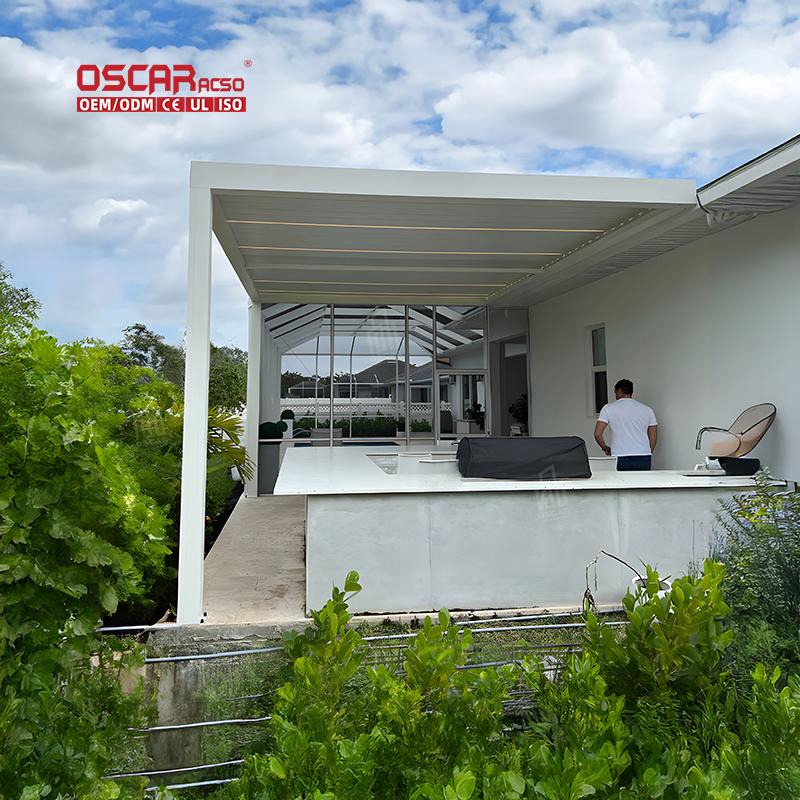
Pergola blades (or louvered blades) are adjustable slats that form the roof of modern pergolas. Unlike fixed solid roofs or open lattices, these blades rotate—typically from 0 to 140 degrees—giving you precise control over light, rain, and airflow. Made primarily from aluminum alloy (like 6063-T5 or 6005-T5), they combine strength with weather resistance, making them ideal for year-round use .Why are they revolutionary? Traditional pergolas offer limited protection, but blades merge flexibility with functionality, turning your patio into a versatile living space.
💡 Key Benefits of Louvered Blades
• All-Weather Protection: Fully closed blades create a waterproof seal—some withstand rainfall intensities of 0.04–0.05 l/s/m² and snow loads up to 180 kg/m² . No more scrambling indoors during rain!
• Sunlight & Ventilation Control: Adjust blade angles to block UV rays, reduce glare, or promote airflow. Perfect for balancing shade and sunlight during summer gatherings ☀️.
• Durability: Aluminum blades resist corrosion, rust, and UV damage. Many include powder-coated finishes (e.g., RAL colors) for extra longevity .
• Energy Efficiency: By reducing direct heat gain, they lower cooling costs for adjacent indoor spaces .
• Aesthetic Appeal: Sleek, modern designs enhance curb appeal. Choose from colors like anthracite gray or custom hues to match your home’s style .
🛠️ Types & Materials
Not all blades are created equal. Here’s a breakdown:
• Aerofoil Blades: Curved designs (e.g., 202mm width) shed water efficiently and prevent sagging across spans up to 4.5m .
• Flat Blades: Minimalist style for contemporary settings.
• Smart vs. Manual:
• Motorized Blades: Controlled via app, remote, or voice assistants (e.g., Alexa). Some include rain/wind sensors that auto-close during storms .
• Manual Blades: Cost-effective but less convenient.
Material Matters:
• Aluminum Alloy: Lightweight, strong, and low-maintenance. Avoids issues like wood rot or insect damage .
• Stainless Steel Hardware: Components like #304 screws ensure rust resistance, especially near coastal areas .
• Professional Installation Recommended: Ensures proper sealing and motor calibration. DIY kits exist but complex setups need expertise .
• Maintenance:
• Clean blades annually with mild soap and water.
• Inspect motors and sensors before seasonal changes.
• Lubricate moving parts if recommended by the manufacturer.
• Warranties: Many products offer 3–5 years on structure and 1 year on electronics .
❓ FAQ: Quick Insights
• Q: Can blades truly block heavy rain?A: Yes! When fully closed, high-quality blades form a watertight barrier. Some even handle winds up to 240 km/h .
• Q: Are they suitable for snowy climates?A: Absolutely—select models support snow loads up to 180 kg/m² .
• Q: How long do motorized blades last?A: With proper care, aluminum blades can exceed 30 years; motors may need replacement after 5–10 years .
🏡 Personal Opinion: Why Blades Are a Game-Changer
As someone who’s seen countless outdoor trends, I believe louvered blades are the future of pergolas. They solve the timeless dilemma of wanting open-air freedom without weather’s whims. The joy of hosting a barbecue that continues seamlessly into a rain shower? Priceless.Moreover, blades reflect a shift toward adaptive architecture—homes that respond to nature rather than fight it. While initial costs are higher than fixed roofs, the long-term value in usability, energy savings, and property appeal makes them a wise investment.Final Thought: The best outdoor spaces feel like natural extensions of our lives. Pergola blades—with their mix of tech, durability, and elegance—make that possible, rain or shine. 🌦️


.jpg "blades for pergola")
.jpg "blades for pergola")

.jpg "blades for pergola")