

Ever dreamed of a backyard that’s not just beautiful but intelligently adapts to your mood and the weather? 🌞 Welcome to the world of modern outdoor structures! Pergolas, gazebos, pavilions, and louvers are no longer just static fixtures—they’re dynamic extensions of your living space. But what sets them apart, and why are they becoming must-haves for homeowners? Let’s explore!

Understanding the Key Players
First, let’s clarify the basics. A pergola is an open-air structure with cross-beams, often used for partial shade and climbing plants. A gazebo is typically a freestanding, roofed pavilion, ideal for seating areas. A pavilion is larger, resembling an outdoor room, while louvers refer to adjustable slats (like those in a louvered roof) that control sunlight and ventilation. Personally, I see louvers as the game-changer—they transform rigid structures into responsive, smart spaces. 🍃
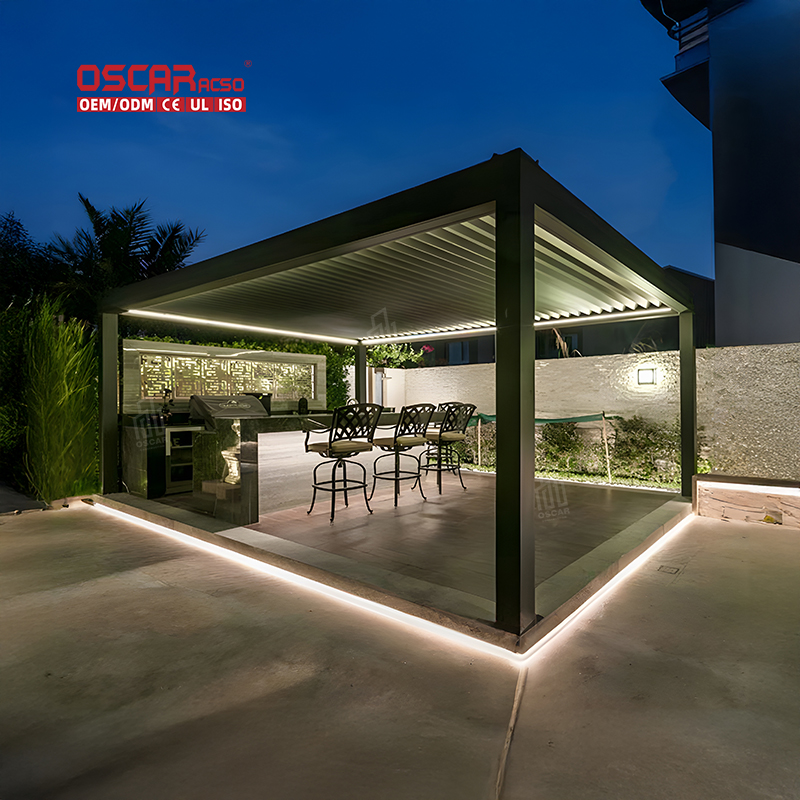
Why Integrate Louvers into Your Design?
The magic lies in customization! Louvers allow you to tweak light and airflow with a button press. Imagine hosting a summer brunch: open the louvers for a breeze, then close them for shade during peak heat. Compared to fixed roofs, louvered systems offer:
- •
Weather adaptability: They can be sealed to resist rain or snow.

- •
Energy efficiency: By regulating heat gain, they reduce cooling costs—similar to advanced glass technologies that minimize thermal loss.
- •
Aesthetic flexibility: From modern minimalist to rustic chic, louvers blend seamlessly. I’ve advised clients to pair them with LED lights for evening ambiance—it’s a total vibe! 💡
.jpg "pergola gazebo pavilion louvers")
But are they durable? Absolutely! High-end aluminum louvers withstand strong winds and heavy snow loads, thanks to robust engineering.
Material Matters: Aluminum Takes the Crown
When it comes to frames, aluminum reigns supreme. It’s lightweight, rust-resistant, and low-maintenance—no more annual staining like wood! Modern powder-coated finishes also prevent scratches and fading. Here’s a quick comparison:

- •
Wood: Traditional but prone to rot and pests.
- •
Steel: Strong but heavy and vulnerable to corrosion.
- •
Aluminum: Combines strength with longevity, often using recycled materials. ♻️
My take? Aluminum’s eco-friendly profile makes it a future-proof choice, especially for motorized systems that demand lightweight durability.
.jpg "pergola gazebo pavilion louvers")
Installation Insights and Pitfalls to Avoid
Planning is key! Start by assessing your space—measure accurately and check local codes. For louvered pergolas, ensure a level base and proper drainage. Common mistakes include:
- •
Skipping professional help: DIY is possible, but motorized systems require expert wiring.
- •
Ignoring ventilation: Louvers should complement airflow, not block it. Pro tip: Add plants like jasmine to enhance natural cooling. 🌿
What about maintenance? A simple hose-down twice a year keeps aluminum looking new. No sanding or painting needed!
The Future: Smart Integration and Sustainability
Look beyond basics! We’re seeing a rise in integrated systems—imagine louvers synced with weather apps, or solar panels powering built-in LEDs. In my projects, I’ve noticed a 20% uptick in requests for eco-features like rainwater channels. Plus, as urban spaces shrink, modular designs (e.g., 2×6 configurations) are gaining traction for their scalability. 🚀