

A pergola color sample should answer a practical question: will the finish you approve look right beside the building, and will the supplier know exactly which parts that approval covers? A photograph marked “white” or “grey” is useful for starting a conversation, but it is not a complete production instruction.
This guide separates three decisions: the design direction, the physical finish reference and the written approval. It is for homeowners, distributors and project buyers reviewing an aluminum pergola order. It does not establish a coating specification or guarantee that a particular color is available.
Start with the parts that need to coordinate
Before requesting samples, identify what the pergola will sit next to: window frames, wall cladding, doors, paving or another outdoor structure. Decide whether the intention is a close match, a deliberate contrast or simply a compatible palette. These are different acceptance goals. “Match the house” leaves the supplier guessing which surface matters.
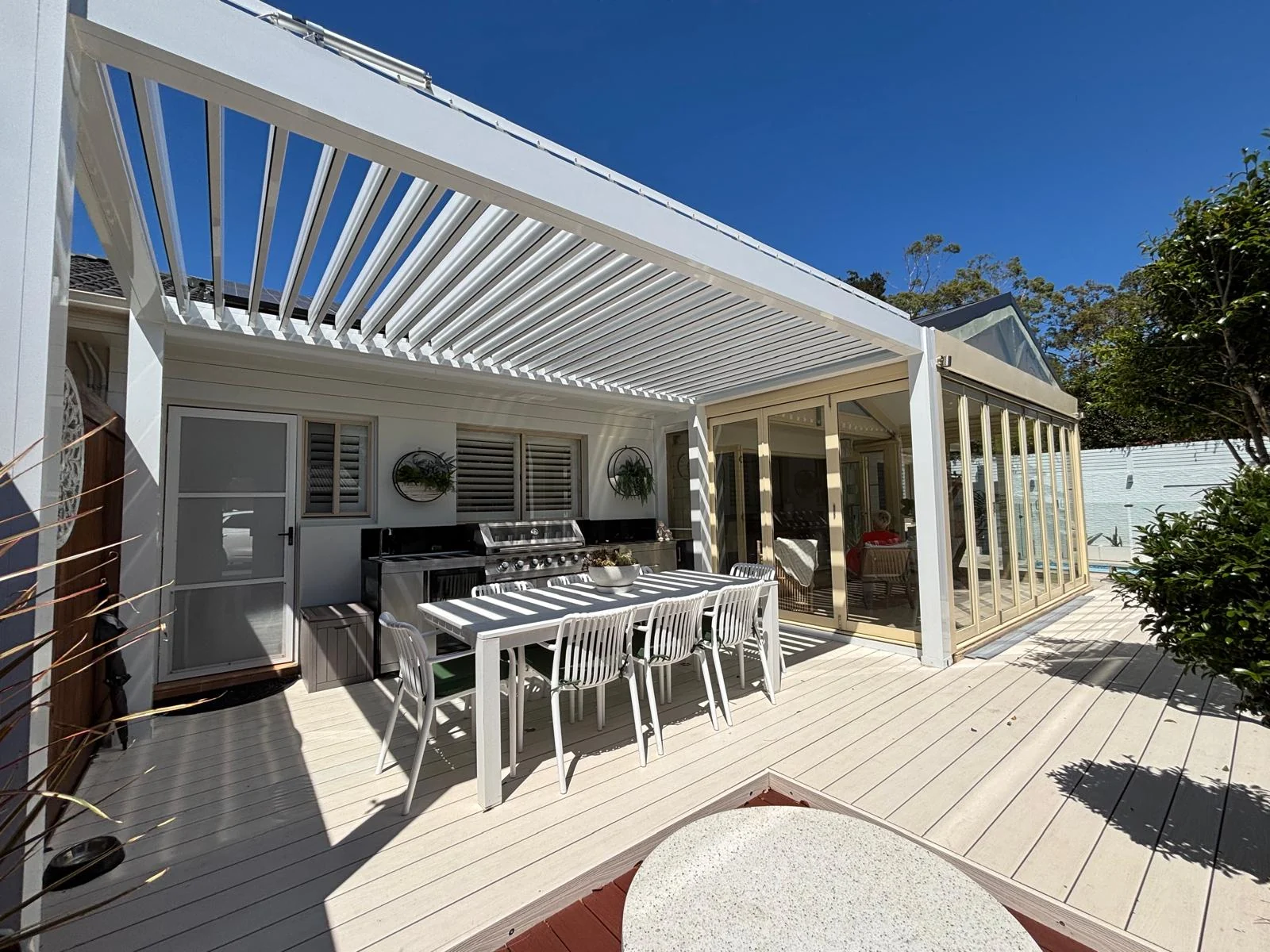
Oscar’s white wall-mounted pergola reference specifically raises color coordination with the building. Use that configuration to discuss the appearance you want, not to infer its exact white shade from the image. For other layouts, compare the reviewed pergola configurations before choosing a finish direction.
Distinguish a color code from a complete finish
Ask the supplier to identify the proposed color reference system and code, where one is used. Then ask separately about surface texture and gloss. Do not assume that the same color name on a beam, screen housing and accessory guarantees the same overall appearance.
RAL explains that its digital color illustrations approximate the physical color and recommends physical samples for final decisions. Its digital color guidance also distinguishes visual design files from colorimetric references. A screen capture should therefore stay in the inspiration file, not become the sole approved production reference.
If your priority is matching an existing window finish, provide the available manufacturer information and a physical reference where practical. If that information is missing, write “appearance to be reviewed against the existing window” rather than inventing a color code from a phone image.
Request a sample that represents the proposed order
Ask what the sample actually represents: a general color card, a coated metal sample or a piece of the proposed profile. A general card can help narrow a choice; for final appearance approval, ask whether a sample using the proposed substrate and finish process can be supplied. Availability, cost and timing need confirmation for the project.
Give each candidate a reference number and keep its label. Record the supplier’s description of the color, gloss and texture alongside it. If the finish on the delivered sample differs from the written proposal, resolve that difference before approving either. An unlabelled sample cannot reliably connect a design choice to a later production instruction.
Compare samples under a repeatable viewing setup
Use the following as an appearance-review method, not as a laboratory test or an industry acceptance standard:
- Place the candidates beside the actual building material they should coordinate with.
- View them together in daylight and in the lighting conditions important to the patio’s use.
- Keep the viewing position and sample orientation consistent when comparing alternatives.
- Check both a close view of the surface and the normal distance from which people will see the structure.
- Record what you accepted and what still concerns you; keep photographs as supporting notes, not substitutes for the physical reference.
A flat card may not show how a visible profile edge will look. If a highly visible junction is critical, ask whether a profile sample or a small mock-up is feasible. Do not prescribe a universal viewing distance or numerical tolerance without an agreed project specification.
Create a component finish schedule
A single “frame color” line can leave roof blades and accessories unresolved. Make a separate entry for each visible component group that is actually included in the order:
- Posts and perimeter beams: reference sample, color identification and proposed surface finish.
- Roof blades: same finish as the frame or a separately approved selection.
- Screen housings and guides: included parts, proposed finish and any confirmed limitations.
- Visible covers, brackets and trim: which pieces are covered by the approval and which remain different.
- Screen fabric or other non-metal materials: their own material references rather than an assumed match to coated metal.
Delete components that are not part of your configuration. For a distributor order with multiple color combinations, assign a configuration identifier to each combination so that quantities and packaging instructions can refer to the same record.
Keep appearance approval separate from performance claims
An attractive sample does not demonstrate corrosion resistance, color retention, coating thickness or warranty coverage. If the intended location has demanding exposure conditions, ask the supplier to review the proposed coating system for that application and identify any supporting documentation relevant to the quoted product.
Do not treat a color code as a certification, or transfer a claim from an unrelated product brochure to your order. Record unresolved technical requirements separately. The appearance can be acceptable while the specification still needs clarification.
Use a clear approval record before production release
The buyer and supplier should be able to point to the same decision. A useful record contains:
- Project or order reference and the drawing or configuration revision.
- Each component group covered by the decision.
- Physical sample identifiers and the accompanying finish descriptions.
- The accepted appearance, agreed review conditions and any explicit exceptions.
- The person authorized to approve, the decision date and the supplier’s acknowledgement.
- A clear status: approved, revision requested or pending clarification.
If approval is conditional, identify the condition and who must close it. Do not write “approved except for the color” on a color approval record. Ask how a change after approval would affect the proposal before authorizing it; this guide does not assume a particular change fee or production timetable.
Keep the reference useful after delivery
Retain the approved physical sample and its record in suitable storage. For later additions or replacement parts, provide the original order reference and ask the supplier to assess the match again. Do not promise that a future part will look identical solely because the old color name is repeated.
If a delivered component appears inconsistent, first identify the part, its agreed finish reference and the viewing conditions. Document the observation and contact the supplier before attempting a touch-up or refinishing. Appearance review should support a clear discussion, not replace the agreed delivery inspection procedure.
What to send to Oscar
Send the intended configuration, the building surface you want to coordinate with, the preferred finish direction and your proposed component schedule. Oscar’s OEM and project services include customization coordination; sample availability and the final finish remain subject to project review. Use the project enquiry page to identify the decisions that still need confirmation.
Editorial responsibility: Published by the Oscar Pergola website editorial account, hgjhuang. This is a buyer decision guide based on the linked Oscar configuration and service pages, RAL’s published digital-color guidance and an original approval checklist. It is not a report of factory testing or a claim that a specific sample service, color range or coating certification has been confirmed for your order.