

.jpg "how much does pergola cost")
Dreaming of a shaded retreat in your garden? A pergola can be that perfect blend of elegance and function, but understanding the costs involved is key to bringing your vision to life without breaking the bank. Let’s break down the numbers.

What Exactly is a Pergola? 🤔
Before we dive into costs, let’s be clear on what we’re talking about. A pergola is an outdoor structure with an open-roof framework, often supported by posts or columns. It provides partial shade, defines an outdoor space, and can serve as a support for climbing plants. Unlike a solid-roof gazebo, it allows for air and light to filter through.
Breaking Down the Price Tag: A Spectrum of Choices
The cost of a pergola isn’t a single number; it’s a range influenced by numerous factors. You can expect to pay anywhere from 1,000forasimple,smallDIYproject∗∗to∗∗over15,000 for a large, high-end, professionally installed and motorized model with all the bells and whistles.
A very common mid-range price for a standard 10’x10′ wood pergola, either built from scratch or as a kit, often falls between 1,500and4,000.
1. Material Matters: The Biggest Cost Driver
Your choice of material dramatically impacts both the initial investment and long-term maintenance.
- •
Wood (Classic & Customizable): The most popular choice. Pressure-treated pine is the most affordable (10−50/sq ft), while naturally rot-resistant cedar or redwood commands a higher price. Offers a traditional look but requires regular staining or sealing.
- •
Vinyl (Low Maintenance): A budget-friendly (10−30/sq ft) and low-upkeep option, though it may lack the natural appeal of wood and can be less durable in some conditions.
- •
Aluminum (Modern & Durable): Growing in popularity for modern gardens. Prices often range from 80to350 per square meter, offering a sleek look, rust-resistance, and very low maintenance. Many motorized bioclimatic pergolas are aluminum.
- •
Fiberglass (Premium & Lightweight): The high-end option (50−70/sq ft), known for being strong and lightweight, ideal for integrating features like built-in lights or fans.
2. Size & Complexity: Bigger and Fancier Costs More
It’s simple math: a larger pergola requires more materials and labor.
- •
A basic 10’x10′ (100 sq ft) structure is a standard starting point.
- •
A 12’x12′ (144 sq ft) pergola is a popular size for fitting a dining set or conversation area.

- •
Complexity is a major cost adder. A simple rectangular design is most economical. Curved roofs, intricate latticework, multiple tiers, or integrated features like built-in seating will increase the price.
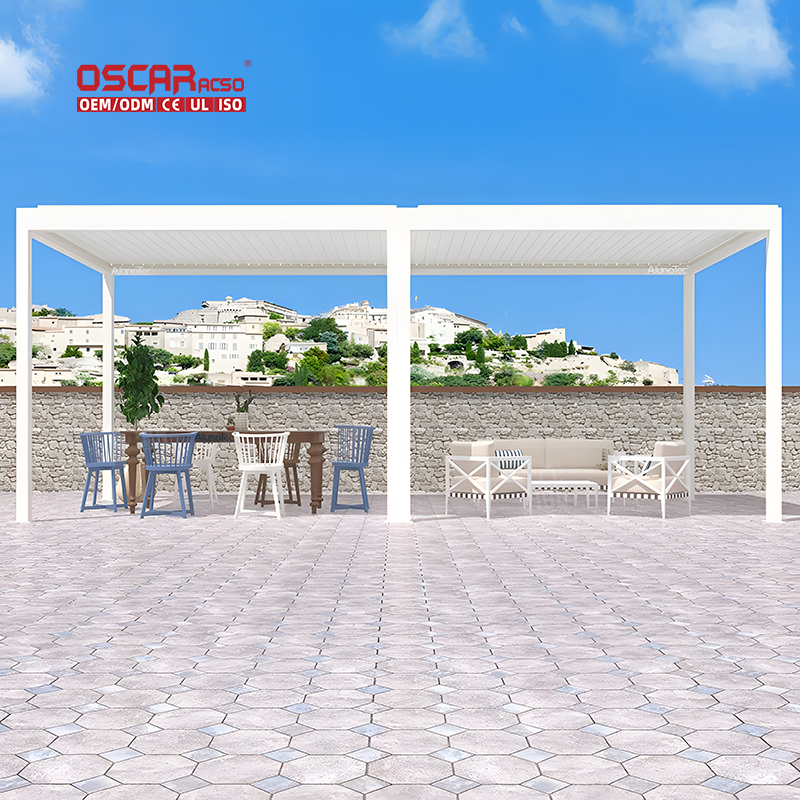
3. DIY vs. Kit vs. Pro Installation 🛠️
This is perhaps your most significant decision regarding cost and effort.
- •
Building from Scratch (DIY):
- •
Cost: Typically the cheapest on materials alone (1,000−3,000 for a 10’x10′).
- •
Skill Level: Requires solid carpentry skills for measuring, cutting, and ensuring the structure is square, level, and sturdy. Mistakes can be costly.
- •
Time: A significant time investment for planning, purchasing, and construction.
- •
- •
Buying a Kit:
- •
Cost: More expensive than sourcing raw materials yourself (2,000−5,000 for a similar size), as you pay for pre-cut, pre-drilled components and convenience.
- •
Skill Level: Much easier for DIYers. Primarily involves assembly following instructions, requiring less advanced tools and skills.
- •
Time: Considerably faster than building from scratch.
- •
- •
Hiring a Professional:
- •
Cost: Adds significant labor costs to the total material price. You could be looking at 30−60 or more per square foot for a full turnkey installation.
- •
Benefit: Expertise, guaranteed work, saves you time and physical effort. Essential for complex designs or if you lack DIY confidence.
- •
4. The High-Tech & Eco-Friendly Option: Photovoltaic Pergolas

For the ultimate blend of form and function, consider a photovoltaic pergola. These structures integrate solar panels into their design, generating electricity while providing shade.
- •
Cost: This is a premium investment, typically ranging from €8,000 to €15,000 (roughly 8,600−16,100 USD), depending on size, panel type, and complexity.
- •
Return: While the upfront cost is high, government incentives for renewable energy may be available, and the long-term savings on electricity bills can help amortize the investment over 5-10 years.
5. Hidden Costs & Budgeting Essentials
Beyond the obvious, remember to factor in:
- •
Permits: Always check local building codes. Permits can cost 100−500.
- •
Foundation & Hardware: Concrete for footings, screws, anchors, and post connectors add to the cost.
- •
Finishes: Stain, sealant, or paint for wood pergolas are essential for longevity and add 50−100 or more.
- •
Additional Features: Shade sails, lighting, fans, climbing plants, or outdoor curtains will all increase your total project cost.
Is a Pergola Worth the Investment? 💡
Absolutely. Beyond the financial cost, consider the value it adds:
- •
Expands Living Space: Creates a dedicated area for relaxation and entertainment.
- •
Boosts Property Value: A well-built pergola enhances curb appeal and garden aesthetics.
- •
Provides Functionality: Offers shade, supports plants, and can define different zones in your yard.
Smart Saving Strategies
- •
Start with a Kit: If you’re new to DIY, a kit balances cost-saving with manageable complexity.
- •
Choose Materials Wisely: Pressure-treated wood offers a great balance of cost and durability.
- •
Keep the Design Simple: A classic, rectangular design is far more affordable than one with complex curves or multiple levels.
- •
Get Multiple Quotes: If hiring a pro, always get at least three detailed quotes.
- •
Consider a Photovoltaic Pergola: If you have the budget and interest in renewables, the long-term energy savings and potential incentives can make it a shrewd financial decision over time.

The cost of your pergola is a personal equation based on your budget, desired materials, and ambition. Whether you DIY a simple wood structure or invest in a motorized aluminum oasis, it’s an upgrade that pays back in countless hours of outdoor enjoyment.