

.jpg "how tall pergola")
Ever wondered why some pergolas feel irresistibly cozy while others impress with their grandeur? 🤔 The secret often lies in their height—a crucial design choice that balances aesthetics, function, and comfort. Typically, pergolas stand between 8 to 12 feet tall, but the ideal measurement depends on your space, needs, and creativity 🌿.
📏 Standard Heights & Why They Work
Most pergolas fall within the 8–12 foot range, with 10 feet being a popular sweet spot. This height offers:
• Ample headroom for movement, avoiding a cramped feel.
• Proportional aesthetics that complement single-story homes and average yards.
• Compliance with many local building codes .
Taller structures (up to 12 feet) suit larger landscapes or dramatic designs, while shorter ones (~8 feet) create intimate nooks ☕.
🎯 Key Factors Influencing Your Choice
Purpose & Use:
.jpg "how tall pergola")
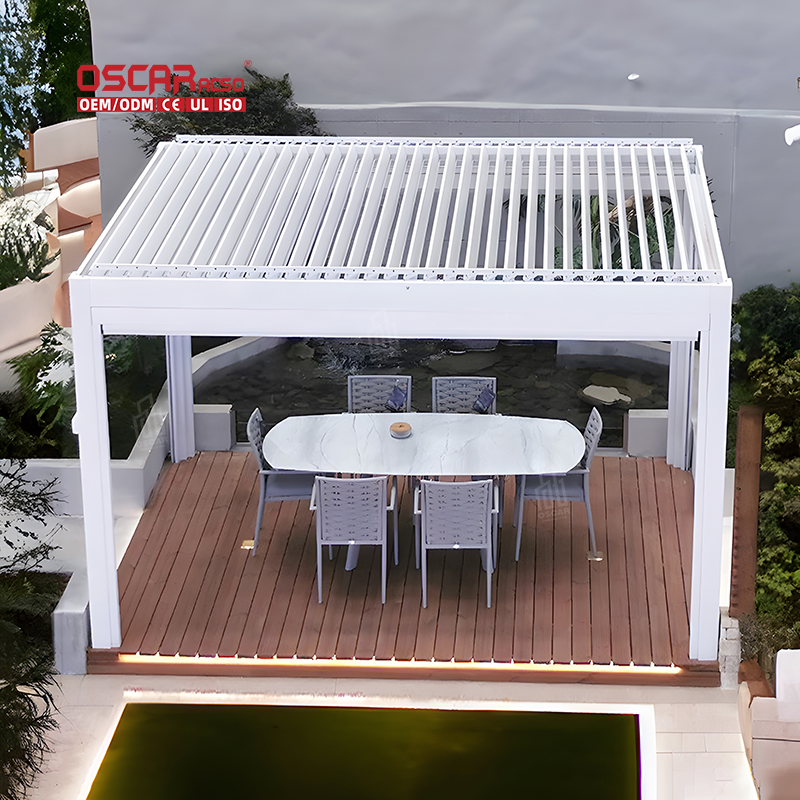
• Dining/Lounging: 8–10 feet ensures comfort without overwhelming the space.
• Supporting Climbing Plants: Opt for 10–12 feet to accommodate growth (e.g., wisteria, roses).
• Entertaining: Heights of 10+ feet feel spacious for gatherings .
Surroundings:
• Match nearby structures (e.g., fences, trees) to avoid visual imbalance.
• Consider sun angles and wind patterns—higher pergolas allow better airflow and light control .
Local Regulations:
• In the UK, attached pergolas often must be under 2.5m (~8.2 feet), while standalone ones can reach 3m (~9.8 feet). Always check codes to avoid redesign headaches!
⚖️ Personalization: Balancing Comfort & Vision
There’s no one-size-fits-all! ✨
• Low (8–9 feet): Cozy, ideal for small patios or decks.
• Medium (10 feet): Versatile for most activities.
• Tall (11–12+ feet): Grand and open, perfect for large yards or pairing with tall features .
Pro Tip: Wider pergolas often need greater height to look proportional. For a 12-foot-wide structure, aim for at least 10 feet in height .
🌿 Design Tips to Enhance Height Perception
Even with limits, you can create illusions:
• Use vertical elements like trellises or hanging plants to draw the eye upward.
• Choose thin beams or light colors to reduce visual weight.
• Add adjustable louvers or canopies for dynamic height effects .
💡 My Take: Height as a Experience Catalyst
In my opinion, pergola height isn’t just a number—it’s a tool to shape experiences. A lower structure encourages intimacy and relaxation, while a taller one inspires entertainment and connection with the sky. 🌌 Don’t just default to averages; consider how you’ll feelunderneath it. For example, a 9-foot height might feel restrictive if you’re tall, but 11 feet could lose coziness. Measure your own comfort first!
🚧 Practical Considerations
• Maintenance: Higher beams may require ladders for cleaning or repairs.
• Cost: Taller pergolas often need more materials and robust foundations.

• Future-Proofing: Anticipate plant growth or new furniture—opt for slightly taller if unsure .
📐 Quick Reference Table
|
Scenario |
Recommended Height |
Notes |
|---|---|---|
|
Small patio |
8–9 ft |
Compact yet functional |
|
Dining area |
9–10 ft |
Fits tables and chairs |
|
Climbing plants
|
10–12 ft |
Room for vines to thrive |
|
Large yard |
12+ ft
|
Makes a visual statement |

🌟 Final Insights
While standards provide a safety net, your perfect height hinges on lifestyle and landscape. Remember:
• Check codes early—avoid redesigns later.
• Mock it up: Use poles or strings to visualize height in your space.
• Think vertically:
Climbing plants 🍃 or hanging lights ✨ can transform even a modest height into a magical retreat.
Ultimately, the best pergola height feels like a natural extension of your home—inviting, functional, and uniquely yours 💚.