

An accessory can fit the width of a pergola without being compatible with its frame, roof movement or controls. Before buying a screen, light or powered add-on for an existing installation, ask for confirmation of the exact combination—not a general statement that the accessory is “suitable for pergolas.”
This guide helps owners and project buyers decide what evidence to request, when to pause a retrofit purchase and how to record an answer. It is not a structural assessment, wiring guide or confirmation that Oscar accessories fit another manufacturer’s system.
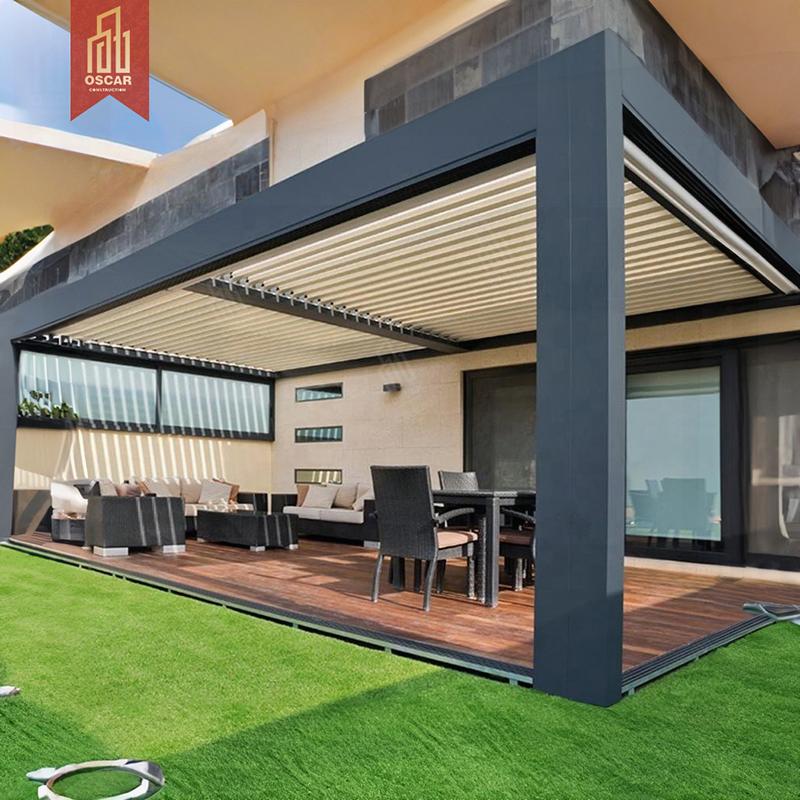
Identify the existing system before choosing the accessory
Start with the installed pergola, not the accessory catalogue. Find the manufacturer, model or project reference, the original drawings and any component labels that can be read safely. Record changes made since installation: an added screen or replaced controller may mean the current arrangement differs from the original order.
Use photographs to identify the proposed attachment area, adjacent moving parts and existing equipment. A photograph is useful context, but it does not establish a hidden fixing detail or the condition of the supporting construction. Do not dismantle covers or access live electrical equipment to collect information.
If the model cannot be identified, treat compatibility as unresolved. “It looks the same” and “the frame is aluminium” are not substitutes for a model-specific answer. Ask the original supplier whether a review is possible and what evidence they need before ordering anything.
Separate three kinds of compatibility
Mechanical fit and attachment
Ask which exact part of the existing assembly is intended to accept the accessory, and whether the proposed bracket and fixing arrangement are approved for that configuration. A matching overall width or an available hole does not establish that the attachment is appropriate. Do not assume drilling, cutting or substituting a bracket is acceptable.
The review should address the accessory as installed, including its support arrangement, rather than only the accessory’s own dimensions. Where the original supplier cannot confirm the proposed modification, obtain an assessment from an appropriately qualified professional before committing to it.
Movement, drainage and service access
Review the proposed add-on with the roof, doors and screens in their relevant operating positions. Ask for the accessory envelope to be shown alongside these parts on a marked-up drawing. Keep drainage openings and access needed for maintenance in the review; an accessory that fits when everything is closed may obstruct another function when it moves or needs servicing.
For example, a hypothetical screen cassette might fit between two posts but cover a removable service panel. That is a reason to pause and revise the arrangement, not evidence that either product is defective. The missing answer is how the equipment will remain serviceable after the addition.
Electrical equipment and controls
For powered accessories, ask for a written list of compatible accessory, power-supply and controller references, together with the intended operating functions. A connector that appears to fit, a shared remote-control style or a similar product name does not confirm compatibility.
Have the responsible qualified installer review the actual equipment and applicable local requirements. This guide does not provide wiring instructions or authorize connections to an existing circuit. Record who will confirm the final arrangement and test its operation.
Adding a screen: check the finished opening, not the roof label
A roof described by its overall size does not define the opening available for a side screen. Identify the finished faces between which the screen system would sit, the proposed guide and cassette positions, and any handles, trim, doors or other obstructions. Measurements need named endpoints and a stated reference level.
The guide to pergola dimensions and clear openings explains these distinctions. For a retrofit, the additional question is whether the existing installation provides the approved attachment and operating space for the exact screen under consideration. Do not turn a clear-width measurement into an installation approval.
Ask the reviewer to identify any unresolved site measurements. If a supplier requests dimensions at several positions, have them collected by a competent person using the supplier’s stated method; do not select the most convenient measurement from an uneven opening.
Adding lighting: confirm the system, not just the light
For an existing pergola, lighting is a compatibility question before it becomes a question of appearance. Identify what is already installed and what the proposed addition changes: mounting location, equipment, control functions and access for future replacement.
Ask whether the existing controller is approved for the proposed combination, whether separate equipment is required, and who will verify the finished installation. Do not infer spare capacity or accessory support from an unused button or connector. If the supplier’s answer covers only a different model or revision, request clarification for the equipment actually on site.
Use a decision gate before placing the order
Classify each proposed addition using the evidence available:
- Ready for the next review stage: the existing system and accessory are identified, and the responsible supplier or professional has confirmed the proposed arrangement in writing. Follow any stated conditions; this is not permission for unqualified installation.
- Hold: a model reference, mounting detail, operating clearance or control requirement remains unknown. Keep the unanswered item visible rather than treating silence as acceptance.
- Revise the proposal: the review identifies a conflict or excludes the proposed combination. Ask for a documented alternative instead of improvising a modification.
A “yes” should state what it applies to. Confirmation for one screen model, mounting position or controller revision should not silently become approval for another.
Keep a short compatibility record for each add-on
Use a separate record for each proposed accessory so that a confirmed lighting change is not mistaken for approval of an unrelated screen. Include:
- Existing installation: manufacturer, model or project reference, drawing revision and known changes.
- Proposed addition: exact accessory reference, intended location and required functions.
- Evidence supplied: labelled photographs, relevant drawings and the measurements requested by the reviewer.
- Open questions: attachment, movement, drainage, service access and any equipment compatibility still to be resolved.
- Written answer: who reviewed the combination, what was confirmed, the document date and any conditions or exclusions.
- Next responsibility: who will verify the site, carry out the authorized work and check operation afterward.
Also ask how the proposed modification affects the existing service or warranty terms. Do not assume either that all changes are covered or that every change automatically invalidates coverage; obtain the applicable written answer.
When a new configuration is the better question
If the existing system cannot be identified or the requested combination is not supported, compare documented alternatives rather than buying an accessory on the assumption that it can be adapted later. Oscar’s pergola configuration catalogue can help frame a new-system discussion, but product photographs do not establish retrofit availability.
For an Oscar project enquiry, send the identified system details and the proposed change through Oscar’s project services and ask whether that specific review can be supported. The services page describes coordinated review of dimensions, screens, lighting and other options; it does not promise universal compatibility with existing or third-party pergolas.
Editorial responsibility: Published by the Oscar Pergola website editorial account, hgjhuang. This original purchasing framework uses the linked Oscar configuration, dimension and service pages to organize buyer questions. The screen example is hypothetical. Compatibility, availability, structural suitability, electrical requirements and installation approval require confirmation for the actual project by the responsible supplier and qualified professionals.